AtomStack Review 2026: Laser Engravers, Cutters and Verdict
Is AtomStack worth it in 2026?
AtomStack is worth considering if you're shopping for laser engraving or cutting equipment and want a manufacturer with a genuinely broad range spanning entry-level diode lasers up to fiber lasers for metal work. It sits squarely in the hobbyist-to-small-business maker space rather than industrial-grade fabrication, and that's exactly where its lineup and accessory ecosystem make the most sense.
At a glance
| Category | Electronics (laser engraving & cutting equipment) |
| Standout feature | Full range from entry diode lasers to fiber lasers for metal engraving |
| Product range | Diode laser engravers (A Series), water-cooled lasers, CO2 cutters, fiber lasers, dual-laser systems, CNC routers |
| Accessories | Honeycomb work tables, rotary rollers, enclosures, air-assist kits |
| Who it's for | Hobbyist makers and small businesses needing engraving/cutting across wood, acrylic, leather and metal |
| Warranty/returns | Varies by model and region — check AtomStack's official policy before ordering |
What AtomStack actually is
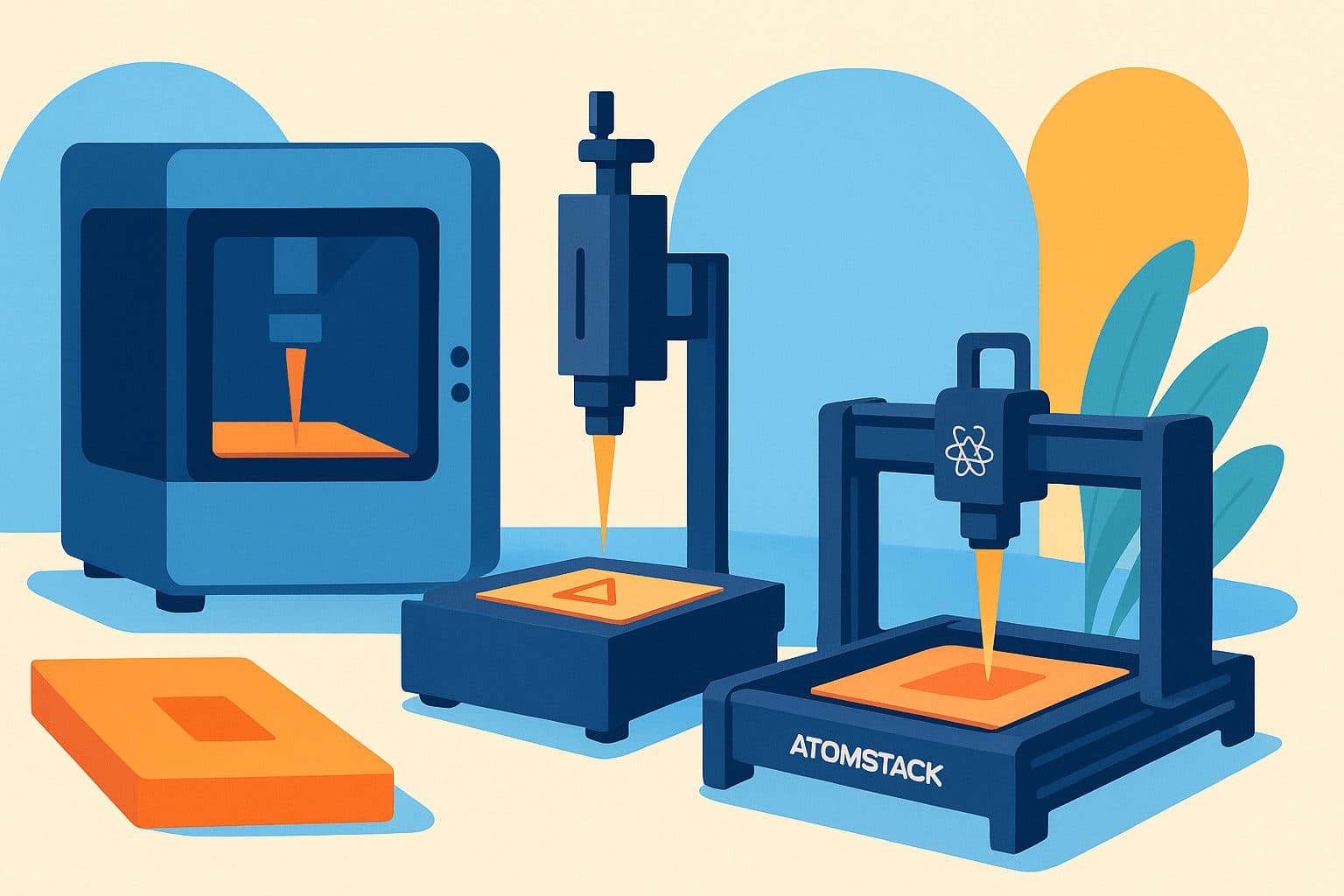
AtomStack is a manufacturer of laser engraving and cutting equipment with a lineup that covers a genuinely wide spread of technology and price points. At the entry level, its A Series diode laser engravers are the most accessible route into laser making, while water-cooled lasers extend that same diode technology to continuous, heavier-duty operation without the same overheating risk that air-cooled diode modules can run into during long jobs. Further up the range, AtomStack sells CO2 laser cutters, fiber lasers built specifically for engraving metal, and combined dual-laser systems that pair two laser types in one machine for more versatile material handling — useful if your projects span both organic materials like wood and leather, and harder materials like anodized aluminum or stainless steel. It also sells CNC routers, which puts it in an adjacent maker-tool category beyond lasers alone, for makers who want subtractive milling and 3D carving in addition to 2D engraving and cutting.
What rounds out the offering — and matters a lot in practice for anyone running a laser regularly — is the accessory catalog: honeycomb work tables for even material support and easier fume/debris clearing, rotary rollers for engraving cylindrical objects like tumblers and bottles, enclosures for safety and fume containment, and air-assist kits that improve cut quality by clearing smoke and debris from the beam path mid-cut. A manufacturer that sells this full accessory ecosystem alongside its machines is generally easier to build a proper workflow around than one that sells bare engravers only, since buyers of bare-bones competitor machines often end up sourcing mismatched third-party accessories that don't fit cleanly.
AtomStack explicitly targets both hobbyist makers and small businesses, which shows in the range: entry-level machines for people getting started with wood, acrylic and leather projects, and higher-powered professional models for shops doing more demanding metal engraving or cutting work. That breadth is a genuine strength, but it also means the right AtomStack machine for you depends heavily on which end of that spectrum you're buying for — a beginner picking up a hobby diode engraver has very different needs, budget and safety requirements than a small business investing in a fiber laser for metal parts production.
Because laser class and wattage directly determine both capability and the safety precautions you'll need (ventilation, eye protection, fire safety), it's worth researching the specific model's power output and intended materials carefully rather than buying based on brand reputation alone — a machine that's perfect for engraving coasters may be entirely unsuited to cutting thicker acrylic or metal sheet.
For anyone new to laser making specifically, the practical starting point is usually one of the diode A Series machines paired with an enclosure and air-assist kit from day one, rather than adding safety accessories after the fact — fumes and stray beam reflection are real hazards even on lower-powered hobby machines, and building good habits early matters more than the specific wattage you start with. Buyers upgrading from a diode machine to a CO2 or fiber system later should also expect a learning curve around new settings for power, speed and focus height, since these don't carry over directly between laser types even within the same brand's ecosystem.
Pros
- Wide range spanning entry-level diode lasers to professional fiber and CO2 systems
- Strong accessory ecosystem (enclosures, air-assist, rotary rollers, honeycomb tables) supports a complete workflow
- Serves both hobbyist and small-business use cases under one brand
- Dual-laser systems offer material flexibility that single-laser machines don't
- Also sells CNC routers, useful for makers who want milling alongside laser work
Cons
- Warranty and return terms vary by model and region, so coverage isn't a single simple policy to check once
- A wide product range means research is needed to pick the right machine for your specific material and power needs
- Higher-powered fiber and CO2 models require more safety infrastructure (ventilation, enclosures) that adds to the real cost of ownership
- As with most laser brands, entry-level diode models have real power and speed limits worth understanding before buying for anything beyond light hobby use
- Buyers need to independently research laser class/wattage safety requirements rather than relying solely on brand marketing
Where to find current deals
Laser engravers and their accessories aren't cheap, so it's worth checking current AtomStack coupons and deals before ordering — discounts on machines and add-ons like enclosures or rotary rollers show up regularly on this page.
Verdict
AtomStack's biggest asset is the breadth of its catalog — few laser-engraving brands span diode, CO2, and fiber technology plus a full accessory line under one name. That makes it a sensible starting point whether you're buying your first hobby engraver or scaling up to metal work, but exactly because the range is so wide, take the time to match the specific model and power level to your actual materials and use case rather than defaulting to whatever's most popular, and confirm warranty terms for your region before you buy.