Bluehost Review 2026: Alternate Plan Pricing and Verdict
This review is researched from each provider's official pricing, plans and public user feedback — see our editorial process for how we keep it accurate.
Is Bluehost worth it in 2026?
Bluehost is worth it for anyone who wants cPanel-based hosting with a free domain and SSL bundled in and doesn't mind reading the fine print on renewal pricing. It's one of the most widely used hosting providers precisely because its shared hosting tiers cover most small-to-mid-size site needs cleanly, but the gap between the introductory price and the renewal rate is real and worth planning around before you commit to a multi-year term.
At a glance
| Category | Hosting |
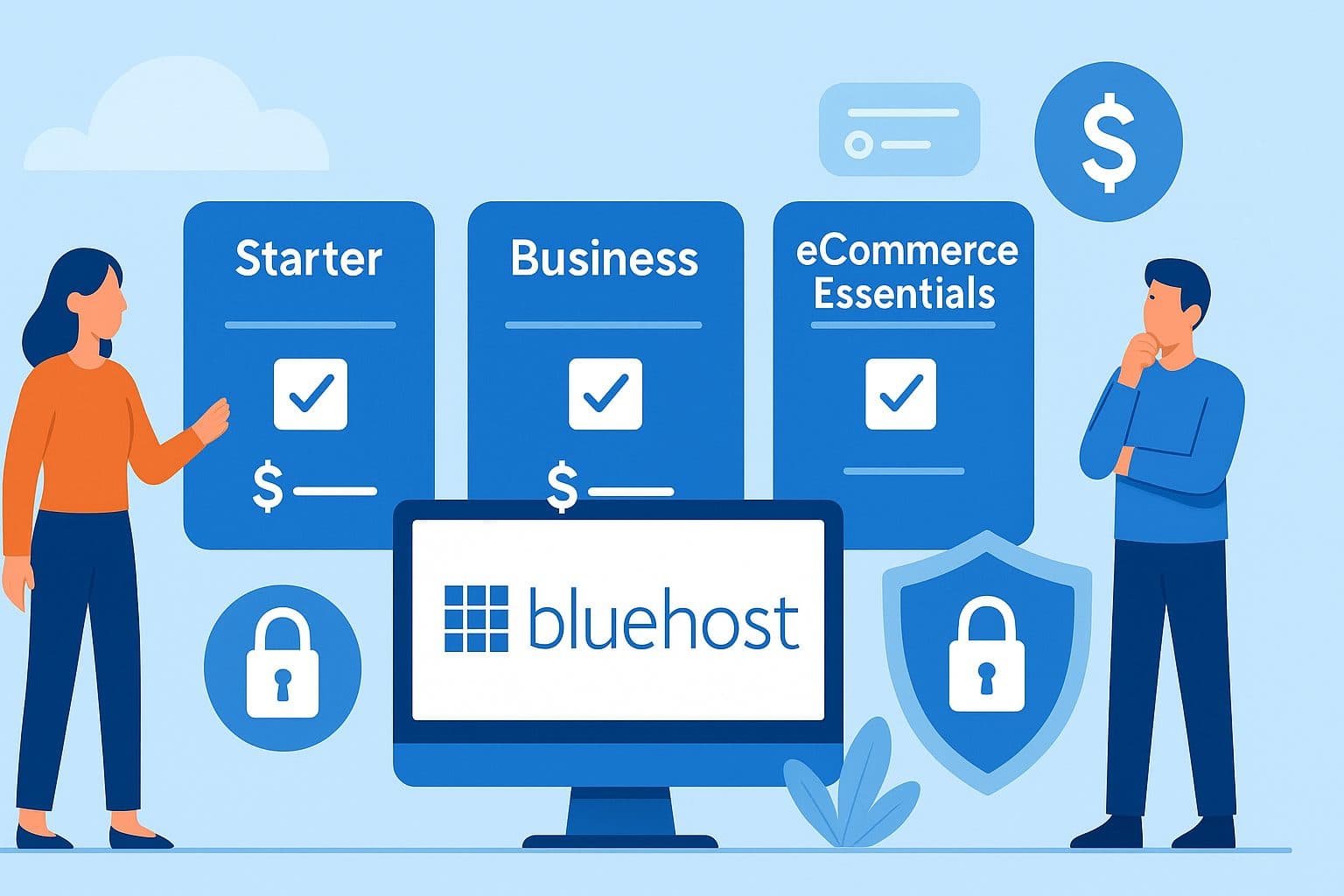
| Plan tiers | Starter, Business, eCommerce Essentials (all on cPanel) |
| Standout feature | Free domain (year one) + free SSL on every plan |
| Who it's for | New and growing sites that want shared, WordPress, VPS or dedicated hosting from one provider |
| Guarantee | Money-back guarantee window — check bluehost.com for the current period and any excluded add-ons |
What Bluehost actually is
Bluehost's shared hosting comes in three tiers — Starter, Business and eCommerce Essentials — each stepping up site and storage allowances as you move up. All three run on cPanel, the most widely recognized hosting control panel, which matters if you've used other cPanel hosts before and want a familiar interface rather than a learning curve. Every tier includes a free domain for the first year and a free SSL certificate, and plans are backed by an uptime SLA, giving buyers a concrete commitment rather than just a marketing claim about reliability.
Beyond shared hosting, Bluehost also offers WordPress-specific hosting, VPS, and dedicated servers, so a site that outgrows shared hosting has a clear upgrade path within the same provider rather than needing a full migration to a different host.
Bluehost is also one of the hosting providers officially recommended in WordPress's own community for years, which matters if you're specifically planning to run WordPress rather than a different CMS — the platform's cPanel setup and one-click WordPress installs are built with that use case in mind rather than being a generic afterthought.
Pricing and plans
The headline catch with Bluehost — and with most hosting providers that advertise an attractive entry price — is that introductory pricing on longer prepaid terms is meaningfully lower than the renewal rate. That advertised low price generally only applies to new customers who lock in the longest available term upfront; after that term ends, the plan renews at a higher standard rate. This isn't unique to Bluehost, but it's worth checking the actual renewal price for the specific plan and term length you're considering before deciding how many years to prepay, so the eventual renewal isn't a surprise. The free domain and free SSL are consistent value-adds across all three shared tiers regardless of term length.
Who it's for — and who should look elsewhere
Bluehost fits well for new bloggers, small businesses and WordPress site owners who want a well-known, cPanel-based host with a straightforward setup process and a clear tier structure to grow into. It's also a sound pick for anyone who values having shared hosting, WordPress-specific hosting, VPS and dedicated servers all under one roof, since that removes the need to switch providers entirely as a site's traffic and requirements grow.
It's a weaker fit for buyers who are extremely price-sensitive about the renewal rate specifically (rather than the entry price) and unwilling to shop around or downgrade a term at renewal time, and for advanced users who want a more developer-centric platform with command-line-first workflows rather than a cPanel-first one. Those users are often better served by an infrastructure-focused host built around that workflow from the ground up.
Support and setup
Because Bluehost runs on cPanel, most setup tasks — installing WordPress, managing email accounts, configuring SSL — follow well-documented, widely-known steps rather than a proprietary interface unique to Bluehost. That familiarity reduces the learning curve for anyone who has used cPanel with a different host before, and there's a large volume of general cPanel documentation and community knowledge to lean on beyond Bluehost's own support channels.
Pros
- Free domain for the first year and free SSL certificate included on every plan
- cPanel control panel, a familiar and well-documented interface
- Uptime SLA backing the hosting commitment
- Clear upgrade path from shared to WordPress-specific, VPS or dedicated hosting
- Money-back guarantee window available — confirm current terms before buying
Cons
- Renewal pricing after the introductory term is higher than the advertised entry price
- Lowest advertised price generally requires prepaying the longest available term
- Some add-ons may be excluded from the money-back guarantee — worth checking before purchase
- cPanel-first workflow may feel less modern to developers used to command-line-driven hosting platforms
Browse current Bluehost coupons and deals for the latest discounted entry pricing.
Frequently overlooked details
Before checking out, it's worth confirming the specific renewal price tied to the term length you're prepaying (Bluehost, like most hosts, publishes this on the plan comparison page, but it takes an extra click past the headline discounted price), whether the free domain stays free only for year one or requires action to keep past that point, and what exactly is and isn't covered under the current money-back guarantee window for your plan and any add-ons purchased alongside it. None of this changes the core recommendation, but skipping it is how a genuinely good entry price turns into an unwelcome renewal surprise a year later.
Verdict
Bluehost remains a solid, mainstream choice for shared and WordPress hosting, especially for anyone who wants a free domain and SSL out of the gate on a familiar cPanel setup. The plans themselves are well-structured across Starter, Business and eCommerce Essentials — just go in with clear eyes on the renewal price for your chosen term, since that's the one place the advertised price doesn't tell the whole story.